Kornwurm: Meaning, Identification, Damage, and Effective Control Methods
Featured Snippet Answer
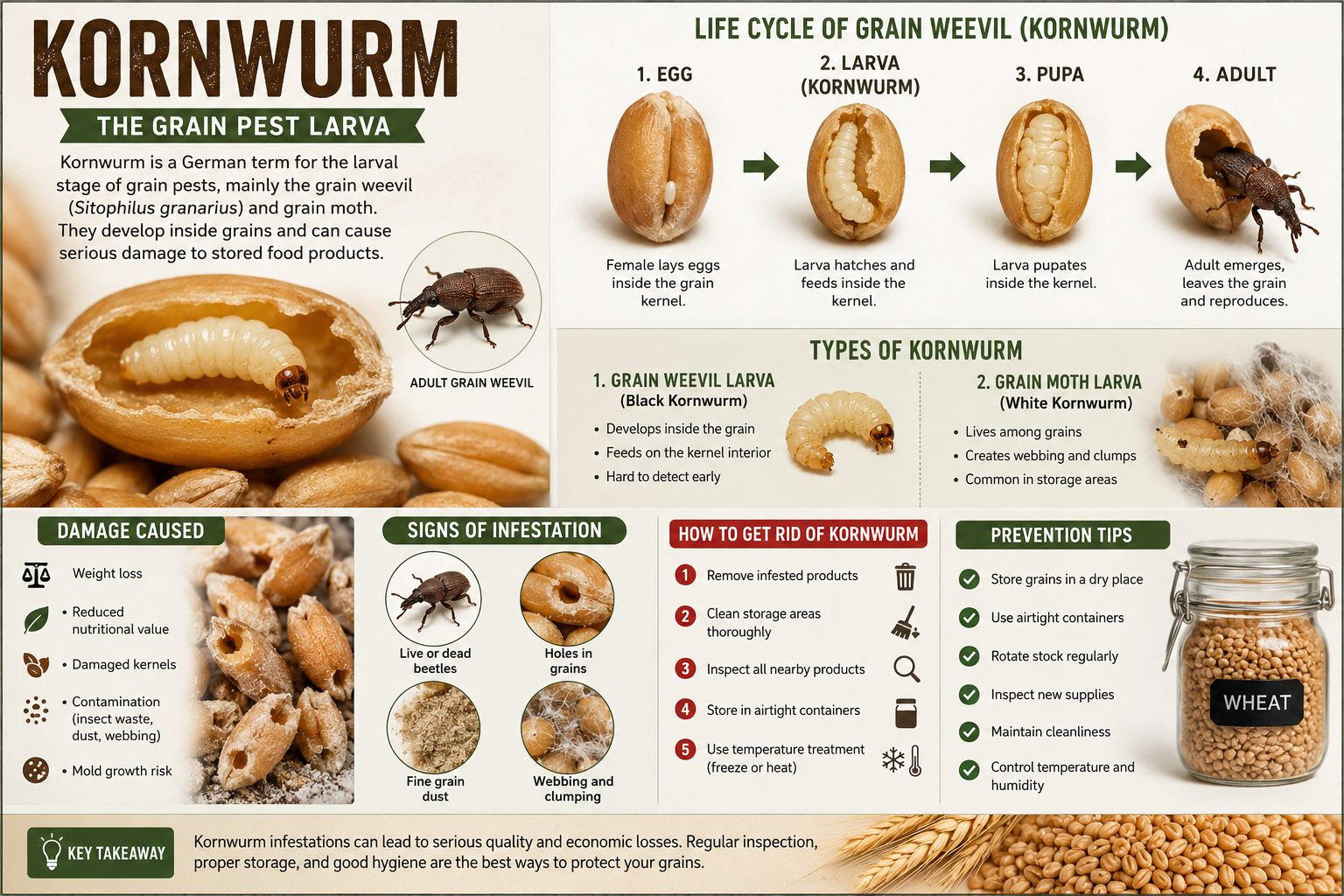
A kornwurm is a traditional German term used for the larval stage of grain pests, particularly the grain weevil (Sitophilus granarius) and certain grain moth species. These insects develop inside stored grains, feed on the kernel, and can cause significant losses in wheat, rice, corn, barley, and other stored food products.
Table of Contents
- What Is a Kornwurm?
- Types of Kornwurm
- How Infestations Begin
- Damage Caused by Kornwurm
- Kornwurm vs. Grain Weevil
- Signs of Infestation
- How to Get Rid of Kornwurm
- Prevention Tips
- Frequently Asked Questions
- Conclusion
What Is a Kornwurm?
The word kornwurm literally translates to “grain worm” and is commonly used to describe larvae that infest stored grain products. Historically, the term referred to several storage pests whose immature stages develop inside grain kernels.
Today, it is most often associated with:
- Grain weevil larvae
- Grain moth caterpillars
- Other grain-infesting storage pests
These insects feed on stored grains and can remain undetected for long periods because much of their development occurs inside the grain itself.
Quick Answer Box
| Question | Answer |
|---|---|
| What is a kornwurm? | A grain-infesting larva or storage pest |
| Where is it found? | Grain silos, warehouses, mills, and food storage areas |
| What does it eat? | Wheat, rice, corn, barley, oats, and similar grains |
| Is it dangerous to humans? | Not directly, but it contaminates food supplies |
| How can it be eliminated? | Remove infested products and thoroughly clean storage areas |
Types of Kornwurm
Grain Weevil Larvae
The most commonly referenced kornwurm is the larva of the grain weevil (Sitophilus granarius).
Characteristics:
- Develops inside individual grain kernels
- Feeds on the grain interior
- Difficult to detect early
- Major pest in stored grain worldwide
Grain Moth Larvae
Another form of kornwurm refers to grain moth caterpillars.
Characteristics:
- Produce webbing among stored grains
- Cause clumping of products
- Contaminate food supplies
- Common in storage facilities
How Infestations Begin
Kornwurm infestations often start unnoticed.
Typical causes include:
- Storing already infested grain.
- Adult insects laying eggs inside kernels.
- Larvae developing within the grain.
- New adults emerging and reproducing rapidly.
Products commonly affected include:
- Wheat
- Rice
- Corn
- Oats
- Rye
- Barley
- Animal feed
- Bird seed
Damage Caused by Kornwurm
Direct Damage
- Loss of grain weight
- Reduced nutritional value
- Damaged kernels
- Lower product quality
Indirect Damage
- Contamination from insect waste
- Increased risk of mold growth
- Reduced market value
- Spoilage of stored food products
Large infestations can result in substantial economic losses for farms, grain elevators, mills, and food storage facilities.
Kornwurm vs. Grain Weevil
Many people use the terms interchangeably, but they are not exactly the same.
| Kornwurm | Grain Weevil |
| Larval stage | Adult insect |
| Lives inside grain | Moves freely outside grain |
| Hard to detect | Easier to identify |
| Causes feeding damage | Reproduces and spreads infestation |
Understanding this distinction helps identify the source and stage of an infestation.
Signs of a Kornwurm Infestation
Visible Insects
Look for small dark beetles in:
- Rice
- Flour
- Wheat
- Animal feed
- Bird seed
Damaged Grain
Common indicators include:
- Small exit holes
- Hollow kernels
- Fine grain dust
Webbing and Clumping
If grain moth larvae are present, you may notice:
- Silk-like webbing
- Clumped grain products
- Sticky residue
How to Get Rid of Kornwurm
1. Remove Infested Products
Discard heavily infested food immediately.
2. Clean Storage Areas Thoroughly
Pay special attention to:
- Shelves
- Cracks and crevices
- Storage containers
- Pantry corners
3. Inspect Nearby Products
Check all surrounding dry goods for signs of infestation.
4. Use Airtight Containers
Transfer grains and dry foods into sealed containers to prevent reinfestation.
5. Apply Temperature Treatments
Many storage pests can be eliminated by:
- Freezing affected products
- Applying controlled heat treatment
Always ensure food safety standards are maintained.
Prevention Tips
Prevention is far easier than treatment.
Best Practices
- Store grain in dry conditions.
- Use airtight containers.
- Rotate stock regularly.
- Inspect new grain deliveries.
- Maintain clean storage facilities.
- Monitor temperature and humidity.
Commercial Storage Recommendations
For farms and grain facilities:
- Implement pest monitoring programs.
- Conduct routine inspections.
- Control moisture levels.
- Follow integrated pest management (IPM) practices.
Key Takeaways
- Kornwurm is a traditional term for grain-infesting larvae.
- Grain weevil larvae are the most common example.
- Infestations often remain hidden inside grain kernels.
- Early detection reduces damage and losses.
- Proper storage practices provide the best protection.
Frequently Asked Questions
What does kornwurm mean?
Kornwurm is a German word meaning “grain worm” and generally refers to larvae that infest stored grain.
Are kornwürmer harmful to humans?
They are not directly dangerous but can contaminate food products and make them unsuitable for consumption.
What foods do kornwürmer attack?
They commonly infest:
- Wheat
- Rice
- Corn
- Barley
- Oats
- Rye
- Animal feed
How do I know if I have a kornwurm infestation?
Look for:
- Small beetles
- Holes in grain kernels
- Grain dust
- Webbing
- Clumped products
Can kornwürmer be prevented?
Yes. Proper storage, routine inspections, and airtight containers significantly reduce infestation risks.
Conclusion
A kornwurm is a grain pest larva that can cause serious damage to stored food products and agricultural grain supplies. Whether associated with grain weevils or grain moths, these pests thrive in poorly managed storage conditions. Regular inspections, proper hygiene, and airtight storage remain the most effective ways to prevent and control kornwurm infestations.








Post Comment