Amloperin: Uses, Dosage, Side Effects & Strength Guide
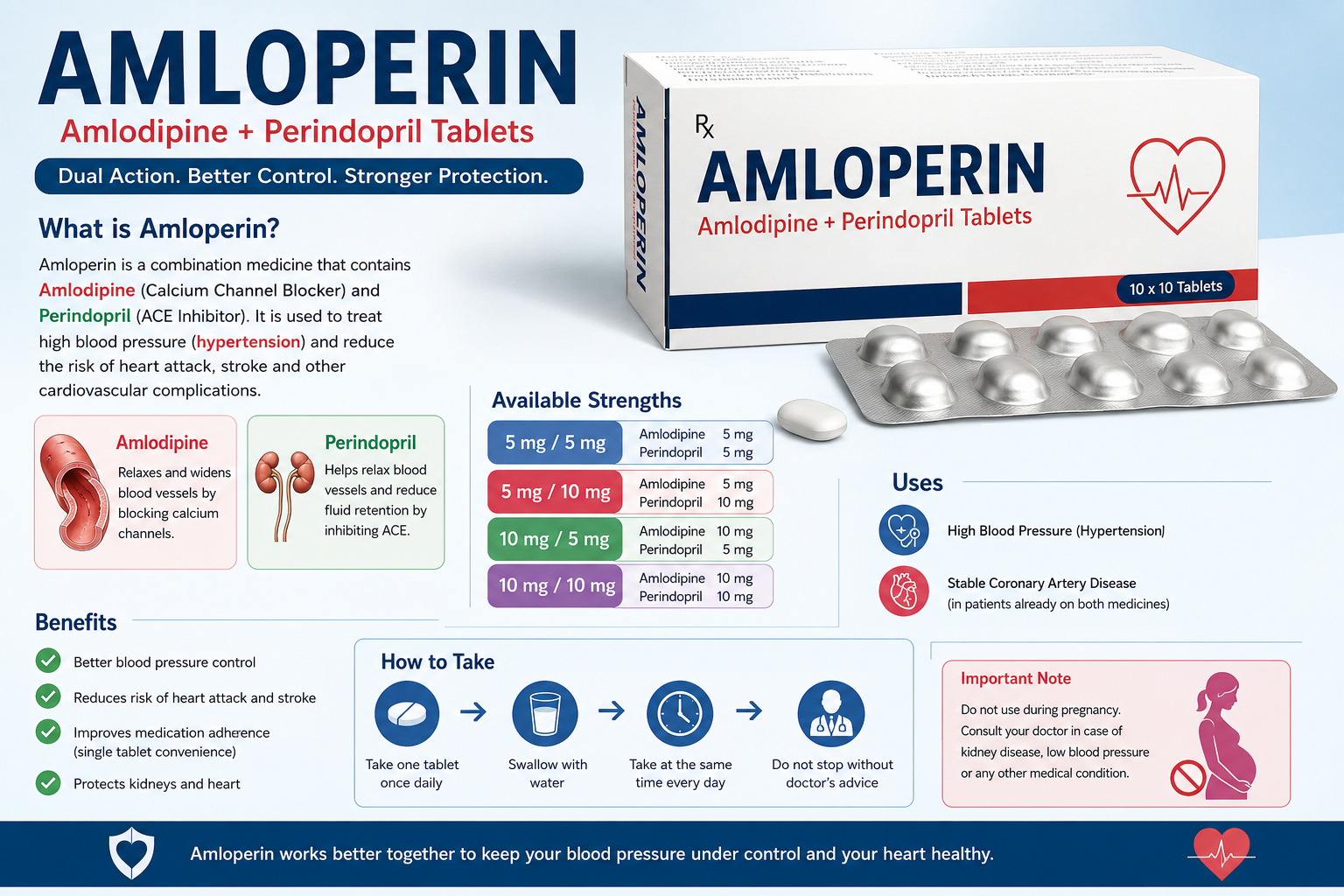
Table of Contents
- What Is Amloperin?
- How Amloperin Works
- Amloperin Strengths Explained
- Uses of Amloperin
- Benefits of Amloperin
- How to Take Amloperin
- Side Effects
- Precautions and Warnings
- Amloperin vs Single-Drug Therapy
- Frequently Asked Questions
- Conclusion
What Is Amloperin?
Amloperin is a combination blood pressure medication containing:
- Amlodipine (a calcium channel blocker)
- Perindopril (an ACE inhibitor)
Doctors prescribe Amloperin to help manage hypertension and reduce cardiovascular risks. Combining two proven blood pressure medications in a single tablet can improve treatment adherence and provide more effective blood pressure control than using either medication alone.
Quick Answer Box
| Information | Details |
|---|---|
| Generic Name | Amlodipine + Perindopril |
| Drug Class | Calcium Channel Blocker + ACE Inhibitor |
| Primary Use | High Blood Pressure |
| Available Strengths | 5/5, 5/10, 10/5, 10/10 mg |
| Prescription Required | Yes |
| Typical Dosing | Once Daily |
How Amloperin Works
Amloperin attacks high blood pressure through two different mechanisms.
Amlodipine
Amlodipine relaxes and widens blood vessels, making it easier for blood to flow through the arteries.
Perindopril
Perindopril inhibits the angiotensin-converting enzyme (ACE), helping blood vessels remain relaxed while reducing the body’s tendency to retain fluid and sodium.
Together, these actions can produce stronger blood pressure control than either medication alone.
Amloperin Strengths Explained
Amloperin is available in four strengths:
| Amloperin Strength | Perindopril | Amlodipine |
|---|---|---|
| 5 mg / 5 mg | 5 mg | 5 mg |
| 5 mg / 10 mg | 5 mg | 10 mg |
| 10 mg / 5 mg | 10 mg | 5 mg |
| 10 mg / 10 mg | 10 mg | 10 mg |
Why Multiple Strengths Exist
Different patients require different levels of blood pressure control.
For example:
- Some patients respond well to lower-dose amlodipine but need more perindopril.
- Others need stronger amlodipine therapy while maintaining a lower ACE inhibitor dose.
- Certain patients eventually require maximum-strength combination therapy.
This flexibility allows physicians to personalize treatment.
Uses of Amloperin
1. Hypertension (High Blood Pressure)
The primary indication for Amloperin is controlling elevated blood pressure. Effective blood pressure management reduces the risk of:
- Stroke
- Heart attack
- Heart failure
- Kidney damage
- Cardiovascular complications
2. Stable Coronary Artery Disease
Some amlodipine-perindopril combinations are also used in patients with stable coronary artery disease who already benefit from both medicines separately.
Benefits of Amloperin
Better Blood Pressure Control
Two complementary medications often lower blood pressure more effectively than one medication alone.
Improved Medication Adherence
Patients take one tablet instead of multiple prescriptions.
Cardiovascular Protection
Long-term blood pressure control reduces cardiovascular risk factors associated with stroke and heart disease.
Personalized Dosing
Four strength options allow physicians to adjust therapy according to patient response.
How to Take Amloperin
Follow your physician’s instructions exactly.
General recommendations include:
- Take the tablet once daily.
- Take it at the same time each day.
- Swallow the tablet whole with water.
- Do not alter your dose without medical advice.
- Continue treatment even if you feel well.
High blood pressure often causes no symptoms, so consistent treatment remains important.
Common Side Effects of Amloperin
Most patients tolerate Amloperin well, but side effects can occur.
Common Side Effects
- Dizziness
- Headache
- Fatigue
- Swollen ankles or feet
- Flushing
- Dry cough
- Palpitations
These effects are generally mild and may improve over time.
Serious Side Effects
Seek immediate medical attention if you experience:
- Severe allergic reactions
- Fainting
- Significant swelling of the face or throat
- Severe chest pain
- Difficulty breathing
Precautions and Warnings
Pregnancy
ACE inhibitors such as perindopril can harm an unborn baby and should generally be avoided during pregnancy.
Kidney Disease
Patients with kidney impairment may require monitoring and dose adjustments.
Low Blood Pressure
Individuals prone to hypotension should use caution, especially when initiating treatment.
Drug Interactions
Potential interactions may occur with:
- Diuretics
- Potassium supplements
- NSAIDs
- Other blood pressure medications
Always inform your healthcare provider about all medications and supplements you take.
Amloperin vs Single-Drug Therapy
| Feature | Amloperin | Amlodipine Alone | Perindopril Alone |
|---|---|---|---|
| Contains Two Medicines | Yes | No | No |
| Blood Pressure Reduction | Stronger for many patients | Moderate | Moderate |
| Convenience | High | Moderate | Moderate |
| Tablet Burden | Lower | Higher when combined | Higher when combined |
Combination therapy is often preferred when one medication alone fails to achieve blood pressure targets.
Expert Insights
Modern hypertension guidelines increasingly favor combination therapy because:
- Blood pressure control is achieved faster.
- Lower doses of individual drugs may reduce side effects.
- Treatment adherence improves when patients take fewer tablets.
Amloperin reflects this trend by combining two established cardiovascular medications into a single daily dose.
Key Takeaways
- Amloperin combines amlodipine and perindopril.
- It is primarily used to treat high blood pressure.
- Available strengths include 5/5, 5/10, 10/5, and 10/10 mg.
- Combination therapy can improve blood pressure control and convenience.
- Common side effects include dizziness, swelling, headache, and fatigue.
- Pregnancy and kidney disease require special consideration.
FAQ Section
What is Amloperin used for?
Amloperin is primarily used to treat hypertension and may also be prescribed for certain patients with stable coronary artery disease.
What does 5 mg/10 mg mean?
The tablet contains 5 mg of perindopril and 10 mg of amlodipine.
Is Amloperin a blood thinner?
No. Amloperin lowers blood pressure but does not thin the blood.
How long does Amloperin take to work?
Blood pressure improvements can begin within days, though full effects may take several weeks depending on the patient and dosage.
Can I stop taking Amloperin suddenly?
Do not stop without consulting your physician. Sudden discontinuation may worsen blood pressure control.
Is Amloperin taken once or twice daily?
Most patients take Amloperin once daily as prescribed by their healthcare provider.
Conclusion
Amloperin is a combination medication containing amlodipine and perindopril, designed to provide effective blood pressure control through two complementary mechanisms. With strengths ranging from 5 mg/5 mg to 10 mg/10 mg, it offers flexible dosing options for patients who require combination therapy. When used under medical supervision, Amloperin can play an important role in reducing long-term cardiovascular risk and maintaining healthy blood pressure levels.








Post Comment