Parawood: What It Is, Benefits, Uses, Durability & Sustainability Guide (2026)
Featured Snippet Answer
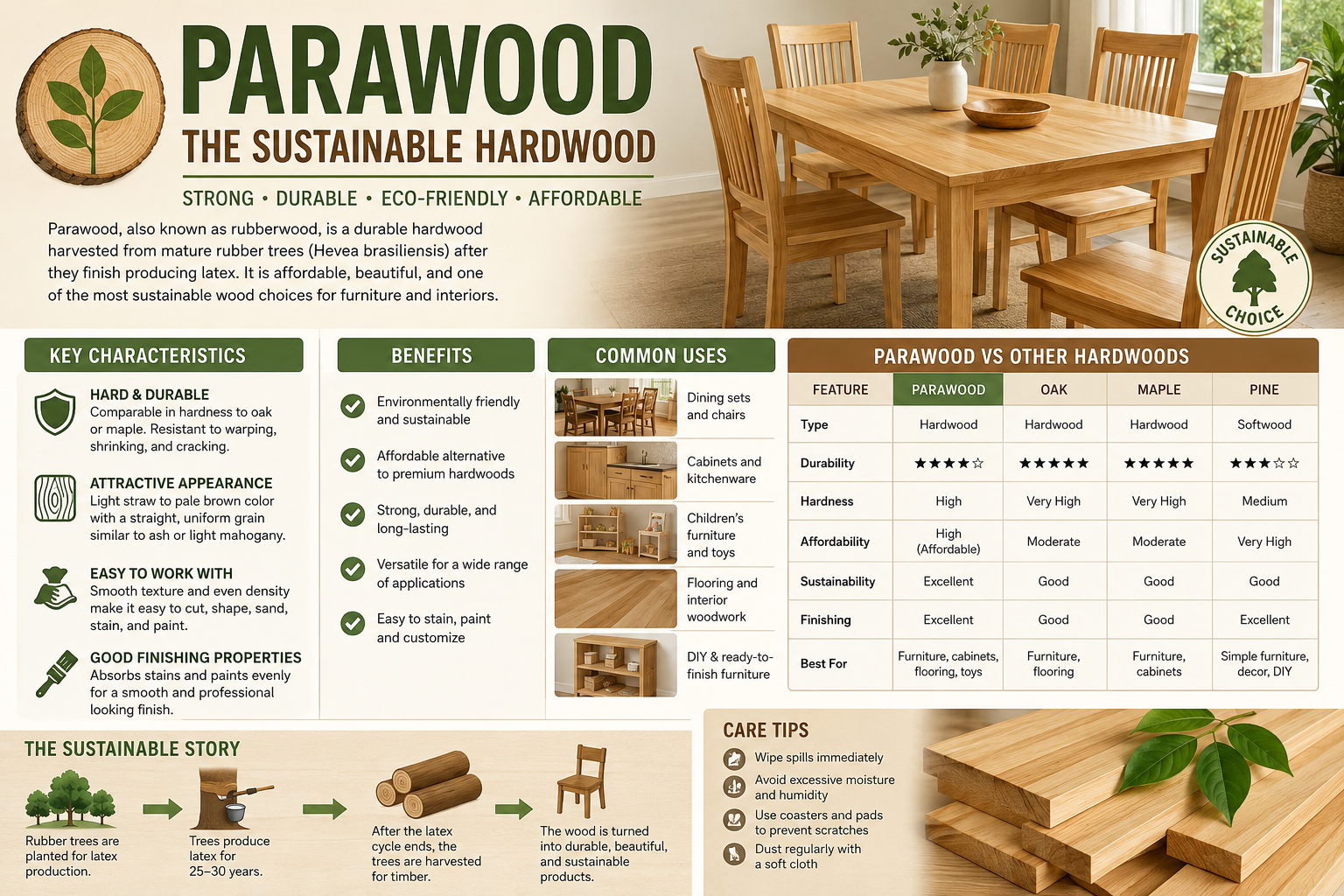
Parawood, also called rubberwood, is a durable hardwood harvested from mature rubber trees (Hevea brasiliensis) after they finish producing latex. It is valued for its affordability, strength, smooth grain, and eco-friendly sourcing, making it one of the most popular woods used in furniture manufacturing worldwide.
Quick Answer Box
| Feature | Parawood |
|---|---|
| Wood Type | Hardwood |
| Scientific Name | Hevea brasiliensis |
| Common Name | Rubberwood |
| Origin | Southeast Asia |
| Hardness | Similar to maple and oak |
| Sustainability | Highly sustainable |
| Color | Light cream to pale brown |
| Common Uses | Furniture, cabinets, flooring, toys |
| Paint/Stain Compatibility | Excellent |
| Cost | Affordable |
Table of Contents
- What Is Parawood?
- Where Does Parawood Come From?
- Key Characteristics of Parawood
- Benefits of Parawood
- Potential Drawbacks
- Common Uses of Parawood
- Parawood vs Other Popular Hardwoods
- Is Parawood Good for Furniture?
- How to Care for Parawood Furniture
- Sustainability and Environmental Impact
- Expert Tips Before Buying Parawood
- Frequently Asked Questions
- Conclusion
What Is Parawood?
Parawood is a hardwood obtained from rubber trees that have completed their latex-producing life cycle, typically after 25 to 30 years. Instead of cutting down trees solely for timber, plantations harvest rubberwood after latex production declines.
This approach transforms what was once considered agricultural waste into a valuable building and furniture material.
Because of this sustainable harvesting method, parawood has become one of the most environmentally responsible hardwoods available on the market.
Where Does Parawood Come From?
Parawood primarily originates from countries with large rubber plantations, including:
- Thailand
- Malaysia
- Indonesia
- Vietnam
- Cambodia
These regions produce the majority of the world’s natural rubber and, consequently, much of the world’s rubberwood lumber.
Related Entity
The wood comes from the Hevea brasiliensis tree, commonly known as the rubber tree, originally native to South America but now widely cultivated throughout Southeast Asia.
Key Characteristics of Parawood
Dense Hardwood Structure
Parawood offers impressive strength despite its affordable price. Its density allows it to withstand everyday wear and tear.
Uniform Grain Pattern
The wood features:
- Straight grain
- Smooth texture
- Minimal knots
- Consistent appearance
These characteristics make it highly desirable for furniture production.
Excellent Finishing Properties
Manufacturers prefer parawood because it:
- Sands easily
- Accepts stains evenly
- Holds paint well
- Produces smooth finishes
Dimensional Stability
Properly dried parawood demonstrates strong resistance to:
- Warping
- Cracking
- Shrinking
- Twisting
Benefits of Parawood
1. Environmentally Friendly
Parawood is often marketed as one of the most sustainable hardwood choices available because it repurposes existing plantation trees.
2. Affordable Alternative to Premium Hardwoods
Compared with:
- Oak
- Walnut
- Cherry
- Maple
Parawood typically costs less while providing similar durability for many applications.
3. Strong and Durable
Its hardness makes it suitable for:
- Dining tables
- Chairs
- Bed frames
- Cabinets
4. Attractive Appearance
Its light natural color complements:
- Modern interiors
- Scandinavian designs
- Farmhouse décor
- Contemporary furniture
5. Easy to Customize
DIY enthusiasts appreciate parawood because it readily accepts:
- Paint
- Stain
- Clear finishes
- Protective coatings
Potential Drawbacks
No wood species is perfect.
Moisture Sensitivity
Although more stable than many softwoods, untreated parawood can absorb moisture over time.
Outdoor Limitations
Parawood is generally not ideal for prolonged outdoor exposure unless specially treated.
Susceptibility to Insects
Raw rubberwood may attract insects if not properly kiln-dried and treated during manufacturing.
Fortunately, most modern furniture-grade parawood undergoes preservation treatment before reaching consumers.
Common Uses of Parawood
Furniture Manufacturing
Parawood is especially common in:
- Dining tables
- Coffee tables
- Chairs
- Bookshelves
- Desks
- Entertainment centers
Ready-to-Finish Furniture
Many unfinished furniture products use parawood because consumers can easily stain or paint it.
Children’s Products
Its smooth grain and workability make it suitable for:
- Toys
- Learning furniture
- Storage units
Home Construction Components
Parawood may also be used for:
- Flooring
- Stair parts
- Interior trim
- Cabinetry
Parawood vs Other Popular Hardwoods
| Feature | Parawood | Oak | Maple | Pine |
|---|---|---|---|---|
| Hardwood | Yes | Yes | Yes | No |
| Affordability | High | Moderate | Moderate | Very High |
| Durability | High | Very High | Very High | Moderate |
| Sustainability | Excellent | Good | Good | Good |
| Paintability | Excellent | Good | Good | Excellent |
| Grain Uniformity | High | Moderate | Moderate | Variable |
| Furniture Use | Excellent | Excellent | Excellent | Good |
Which Is Better?
For buyers seeking a balance of cost, durability, and sustainability, parawood often offers the best value proposition.
Is Parawood Good for Furniture?
Yes.
Parawood has become one of the furniture industry’s most widely used hardwoods because it delivers:
✓ Strength
✓ Affordability
✓ Attractive appearance
✓ Easy finishing
✓ Sustainable sourcing
Many dining sets, office desks, and home furniture collections sold worldwide are manufactured from rubberwood.
For indoor furniture applications, parawood performs exceptionally well when properly maintained.
How to Care for Parawood Furniture
Follow these simple maintenance steps:
Step 1: Dust Regularly
Use a soft microfiber cloth to remove dust buildup.
Step 2: Clean Spills Quickly
Wipe away liquids immediately to prevent moisture absorption.
Step 3: Avoid Extreme Humidity
Keep furniture away from prolonged damp conditions.
Step 4: Use Protective Pads
Place felt pads under heavy objects to prevent surface damage.
Step 5: Refinish When Necessary
Light sanding and refinishing can restore worn surfaces.
Sustainability and Environmental Impact
One reason parawood continues gaining popularity in 2025–2026 is its sustainability profile.
Unlike some hardwoods harvested directly from natural forests, rubberwood comes from managed plantations established primarily for latex production.
Environmental benefits include:
- Reduced timber waste
- Better land utilization
- Renewable plantation resources
- Lower pressure on natural forests
- Extended economic value from existing trees
As consumers increasingly prioritize environmentally responsible products, parawood remains a leading choice in sustainable furniture manufacturing.
Expert Tips Before Buying Parawood
Look for Kiln-Dried Wood
Proper drying improves stability and longevity.
Check Finish Quality
A high-quality finish enhances moisture resistance.
Verify Joinery Construction
Strong joints matter as much as the wood itself.
Consider Intended Use
Parawood excels indoors but may require additional protection outdoors.
Compare Value, Not Just Price
A well-made parawood table can outlast cheaper furniture made from particleboard or low-grade softwoods.
Key Takeaways
- Parawood is harvested from mature rubber trees after latex production ends.
- It is a genuine hardwood with strength comparable to many premium species.
- Sustainability is one of its biggest advantages.
- The wood is affordable, attractive, and easy to finish.
- It is widely used in furniture, cabinetry, flooring, and DIY projects.
- Properly treated parawood provides excellent long-term performance indoors.
Frequently Asked Questions
Is parawood the same as rubberwood?
Yes. The terms “parawood” and “rubberwood” are commonly used interchangeably.
Is parawood durable?
Yes. Parawood is a dense hardwood known for its strength and resistance to warping, cracking, and shrinking.
Does parawood scratch easily?
Like most hardwoods, it can scratch under heavy abuse, but it generally performs well in everyday household use.
Is parawood environmentally friendly?
Yes. It is considered one of the most sustainable hardwood options because it utilizes rubber trees after their latex-producing lifespan.
Can parawood be stained?
Absolutely. Parawood accepts stains exceptionally well due to its uniform grain and density.
Is parawood good for dining tables?
Yes. Its durability, stability, and attractive appearance make it a popular choice for dining furniture.
How long does parawood furniture last?
With proper care, high-quality parawood furniture can last for decades.
Conclusion
Parawood stands out as one of the smartest choices for homeowners, furniture makers, and environmentally conscious buyers. Combining the durability of hardwood, the affordability consumers appreciate, and the sustainability modern markets demand, parawood continues to gain popularity across the furniture and woodworking industries. Whether you’re purchasing a dining table, building a DIY project, or searching for an eco-friendly wood option, parawood offers an impressive balance of performance, value, and responsible sourcing.
5. FAQ Section
Q: What is parawood made from?
A: Parawood comes from mature rubber trees (Hevea brasiliensis) after they stop producing commercial quantities of latex.
Q: Is parawood stronger than pine?
A: Yes. Parawood is significantly denser and more durable than most pine species.
Q: Can parawood be used outdoors?
A: Only if properly treated and protected from prolonged moisture exposure.
Q: Why is parawood considered sustainable?
A: It repurposes plantation rubber trees that would otherwise be discarded after their latex-producing lifecycle ends.
Q: Is parawood expensive?
A: No. It is generally more affordable than oak, walnut, cherry, and many other premium hardwoods.








Post Comment