DoHo Honolulu Revitalization: How Downtown Honolulu Is Transforming Into Hawaii’s Urban Future
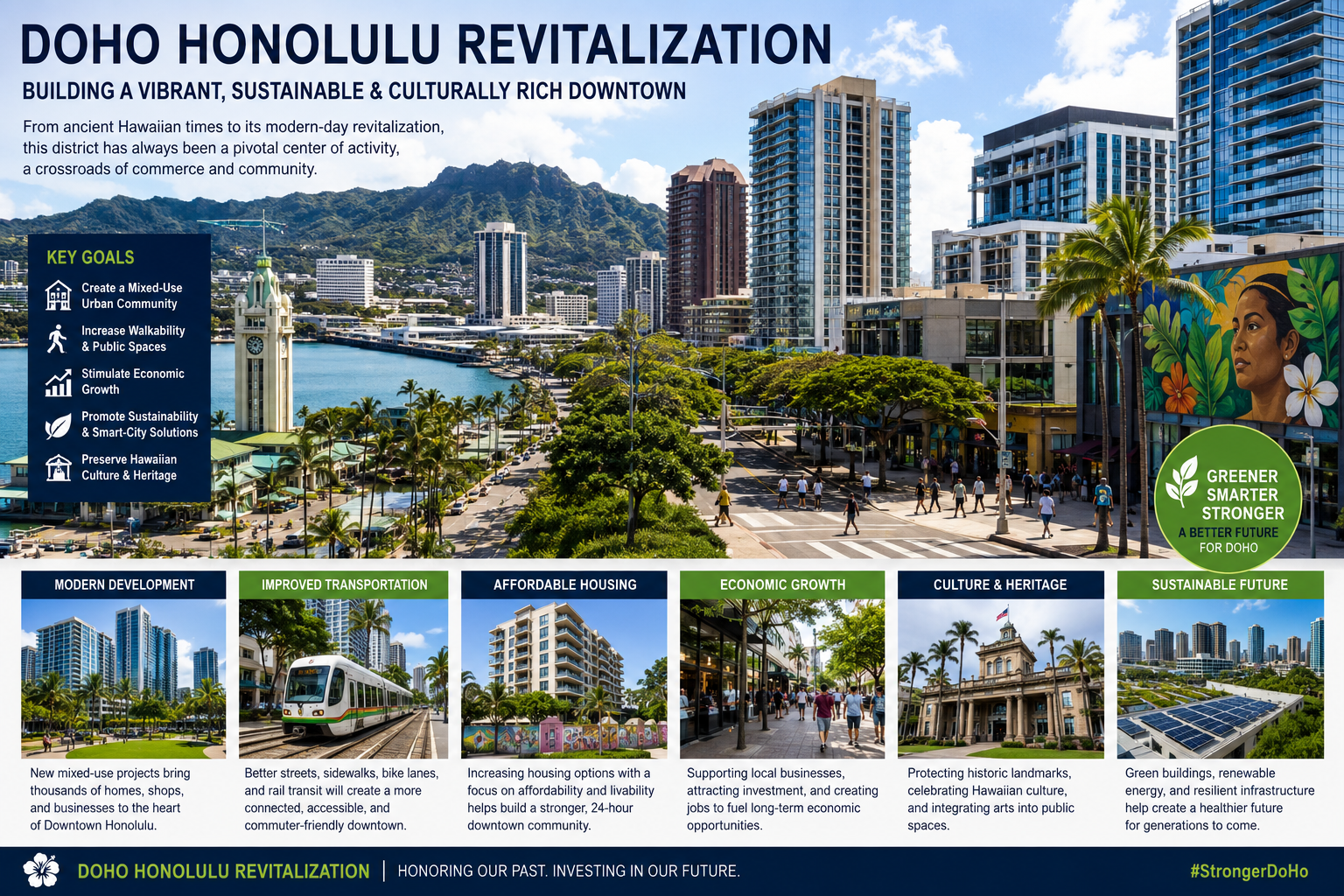
The DoHo Honolulu Revitalization project is transforming Downtown Honolulu into one of the most dynamic urban districts in Hawaii. Once primarily viewed as a business and government center, Downtown Honolulu — commonly referred to as “DoHo” — is evolving into a vibrant mixed-use community focused on housing, sustainability, culture, transportation, and economic growth.
From ancient Hawaiian times to its modern-day revitalization, this district has always been a pivotal center of activity, a crossroads of commerce and community. Today, city planners, developers, local businesses, and residents are working together to reshape the area into a modern urban destination while preserving its deep Hawaiian heritage.
The revitalization movement is not just about new buildings. It represents a larger vision for Honolulu’s future: walkable neighborhoods, improved transit, affordable housing, cultural preservation, and stronger local economies.
What Is DoHo Honolulu Revitalization?
The DoHo Honolulu Revitalization refers to the long-term redevelopment and modernization of Downtown Honolulu. The initiative combines public and private investment to improve infrastructure, housing, commercial spaces, transportation systems, and public gathering areas.
Quick Definition
- DoHo = Downtown Honolulu
- Focuses on urban redevelopment and modernization
- Combines residential, business, cultural, and tourism improvements
- Designed to create a more livable and sustainable urban core
Primary Objectives
- Increase residential living downtown
- Improve public transit access
- Support local businesses
- Create safer pedestrian-friendly streets
- Preserve historic Hawaiian culture and architecture
- Encourage sustainable development
This transformation mirrors revitalization efforts seen in other major cities where aging downtown districts are reinvented into vibrant mixed-use communities.
The Historical Importance of Downtown Honolulu
Downtown Honolulu has been central to Hawaii’s political, cultural, and economic identity for generations.
Long before modern skyscrapers appeared, this region served as an important Hawaiian settlement connected to trade, governance, and ocean navigation. During the Kingdom of Hawaii era, the district became the administrative and commercial heart of the islands.
Historic landmarks such as:
- ʻIolani Palace
- Kawaiahaʻo Church
- Aliʻiōlani Hale
- Aloha Tower
continue to shape the area’s identity today.
As Honolulu expanded during the 20th century, suburban growth pulled residents and businesses away from the downtown core. Office buildings dominated the area, but after business hours, streets often became quiet and underutilized.
The current revitalization aims to reverse that trend.
Why Downtown Honolulu Needed Revitalization
Several economic and social challenges pushed city leaders toward redevelopment initiatives.
Key Problems Facing Downtown Honolulu
Aging Infrastructure
Many roads, sidewalks, utilities, and buildings required modernization.
Declining Residential Population
Downtown lacked enough housing options to maintain a strong 24-hour community.
Economic Competition
Areas like Waikīkī and Kakaʻako attracted more tourism, entertainment, and investment.
Traffic Congestion
Heavy reliance on cars created mobility issues and parking challenges.
Limited Public Spaces
Residents and visitors wanted more parks, gathering areas, and pedestrian-friendly zones.
Without strategic investment, downtown risked losing its economic relevance and cultural vibrancy.
Key Goals of the DoHo Honolulu Revitalization
1. Create a Mixed-Use Urban Community
Modern downtown districts thrive when people can:
- Live
- Work
- Shop
- Dine
- Socialize
within the same neighborhood.
DoHo’s redevelopment strategy focuses heavily on mixed-use zoning and residential expansion.
2. Increase Walkability
Urban planners aim to reduce car dependency by improving:
- Sidewalks
- Bike lanes
- Public plazas
- Pedestrian crossings
- Streetscape design
3. Improve Economic Activity
The city wants to attract:
- Entrepreneurs
- Restaurants
- Technology startups
- Creative industries
- Retail businesses
A stronger local economy creates jobs and increases long-term investment.
4. Preserve Cultural Identity
Unlike many redevelopment projects that erase local heritage, Honolulu’s strategy emphasizes Hawaiian culture, historical preservation, and community identity.
Major Development Projects Reshaping DoHo
Several major projects are driving the transformation of Downtown Honolulu.
DoHo Honolulu Revitalization and Mixed-Use Development
Mixed-use construction is one of the biggest drivers behind the urban transformation.
Residential Towers
New high-rise developments are bringing thousands of residents into downtown areas previously dominated by office buildings.
Benefits include:
- Increased foot traffic
- More local spending
- Safer streets through active communities
- Reduced commuter congestion
Commercial Redevelopment
Older office properties are being modernized into:
- Flexible coworking spaces
- Creative offices
- Retail hubs
- Restaurant districts
Waterfront Improvements
Honolulu’s waterfront areas are receiving renewed attention through beautification projects and tourism-focused upgrades.
Infrastructure and Transportation Improvements
Transportation modernization is essential to the success of the DoHo Honolulu Revitalization effort.
Honolulu Rail Transit
The Skyline rail system is expected to improve regional connectivity and reduce traffic congestion over time.
Street Enhancements
Recent improvements include:
- Wider sidewalks
- Better lighting
- Landscaping upgrades
- Traffic calming measures
- Bicycle infrastructure
Public Transit Integration
Improved bus and rail coordination helps residents move more efficiently without relying entirely on private vehicles.
Affordable Housing and Urban Living Initiatives
One major goal of redevelopment is increasing housing accessibility.
Why Housing Matters
A thriving downtown requires a permanent residential population rather than only daytime office workers.
Housing Priorities
City planners are focusing on:
- Workforce housing
- Affordable apartments
- Transit-oriented development
- Mixed-income communities
Challenges
However, balancing development with affordability remains difficult due to:
- High construction costs
- Limited island land availability
- Rising property demand
Housing affordability continues to be one of Honolulu’s biggest urban planning concerns.
Economic Impact on Local Businesses
Revitalization projects often create major economic ripple effects.
Positive Business Impacts
Increased Foot Traffic
More residents and tourists mean higher customer volume.
Tourism Expansion
Downtown Honolulu is becoming more attractive beyond traditional Waikīkī tourism.
New Investment Opportunities
Developers, retailers, and hospitality businesses are increasingly targeting the district.
Industries Benefiting Most
| Industry | Potential Benefit |
|---|---|
| Restaurants | Increased dining demand |
| Retail | Higher pedestrian activity |
| Hospitality | Expanded visitor traffic |
| Real Estate | Property appreciation |
| Technology | Urban office growth |
| Tourism | Diversified visitor experiences |
Cultural Preservation and Hawaiian Identity
One of the most important aspects of redevelopment is protecting Honolulu’s cultural character.
Cultural Preservation Within DoHo Honolulu Revitalization
Urban development can sometimes erase local identity. Honolulu’s approach attempts to avoid that mistake.
Preservation Efforts Include
- Restoring historic buildings
- Supporting Hawaiian cultural programs
- Integrating local art into public spaces
- Protecting culturally significant sites
- Encouraging Hawaiian language visibility
Why This Matters
Authentic cultural preservation helps maintain:
- Community identity
- Historical continuity
- Tourism authenticity
- Educational value
The district’s revitalization works best when modernization and heritage coexist.
Sustainability and Smart-City Planning
Modern urban redevelopment increasingly prioritizes environmental responsibility.
Sustainable Development Features
Many new projects incorporate:
- Energy-efficient architecture
- Solar technology
- Water conservation systems
- Green roofs
- Smart lighting systems
Climate Considerations
As an island city, Honolulu faces unique environmental challenges including:
- Rising sea levels
- Coastal erosion
- Extreme weather risks
- Energy dependence
Sustainability planning is critical for long-term resilience.
Challenges Facing the Revitalization Effort
Despite strong momentum, several obstacles remain.
Rising Costs
Construction and land expenses in Hawaii remain extremely high.
Community Concerns
Some residents worry about:
- Gentrification
- Cultural displacement
- Increased living costs
- Overdevelopment
Infrastructure Complexity
Upgrading utilities, transportation, and aging buildings simultaneously is expensive and time-consuming.
Economic Uncertainty
Tourism fluctuations and broader economic shifts can affect redevelopment timelines and investor confidence.
Comparison: Old Downtown vs Revitalized DoHo
DoHo Honolulu Revitalization Compared to Historic Downtown
| Feature | Traditional Downtown | Revitalized DoHo |
|---|---|---|
| Primary Use | Office district | Mixed-use community |
| Activity Level | Mostly daytime | 24-hour urban environment |
| Transportation | Car-dependent | Transit-oriented |
| Housing | Limited residential | Expanded urban living |
| Public Spaces | Minimal gathering areas | Walkable plazas and parks |
| Economic Focus | Government/business | Diverse industries |
| Street Experience | Functional | Pedestrian-friendly |
This shift reflects broader urban development trends happening globally.
Why Investors and Residents Are Paying Attention
Downtown Honolulu’s transformation is attracting growing interest from both investors and residents.
For Investors
The area offers potential advantages such as:
- Long-term property appreciation
- Tourism-related growth
- Commercial redevelopment opportunities
- Expanding residential demand
For Residents
Many people are drawn to urban living because of:
- Shorter commutes
- Walkability
- Cultural experiences
- Entertainment access
- Reduced transportation dependency
As more amenities arrive, downtown becomes increasingly attractive as a permanent residential destination.
Future Outlook for Downtown Honolulu
The future of DoHo appears increasingly ambitious.
Expected Long-Term Trends
Experts anticipate continued growth in:
- Mixed-use developments
- Transit-oriented communities
- Green infrastructure
- Technology-driven urban services
- Cultural tourism
Potential Transformation Over the Next Decade
Downtown Honolulu could evolve into:
- Hawaii’s leading urban innovation hub
- A major Pacific business center
- A model for sustainable island-city planning
- A stronger residential community
Success will depend on balancing modernization with affordability, sustainability, and cultural preservation.
Expert Tips for Understanding Urban Revitalization Projects
If you want to better evaluate redevelopment efforts like DoHo, consider these factors:
Look Beyond New Buildings
Successful revitalization includes:
- Community engagement
- Transportation access
- Economic opportunity
- Cultural preservation
Watch Transit Investments
Transit systems often determine long-term urban growth patterns.
Follow Housing Trends
Residential development strongly influences local business success and neighborhood stability.
Evaluate Public Space Quality
Walkable streets and gathering spaces usually indicate stronger long-term urban planning.
FAQ
What does DoHo mean in Honolulu?
DoHo is a shorthand term for Downtown Honolulu, similar to urban district abbreviations used in cities like SoHo in New York.
Why is the DoHo Honolulu Revitalization important?
The revitalization is important because it modernizes downtown infrastructure, supports economic growth, increases housing opportunities, and preserves Hawaiian cultural identity.
What are the biggest goals of the project?
The major goals include:
- Increasing walkability
- Expanding housing
- Supporting local businesses
- Improving public transportation
- Encouraging sustainable development
How does revitalization affect local residents?
Residents may benefit from improved amenities, transportation, and economic opportunities, though concerns about affordability and gentrification remain important issues.
Is Downtown Honolulu becoming more residential?
Yes. One major focus of redevelopment is transforming downtown into a mixed-use neighborhood where people can live, work, and socialize.
Conclusion
The DoHo Honolulu Revitalization represents far more than a construction initiative. It reflects Honolulu’s broader vision for a modern, sustainable, culturally grounded urban future.
By combining infrastructure upgrades, housing expansion, transportation improvements, business development, and cultural preservation, Downtown Honolulu is redefining its role within Hawaii’s economy and community life.
The success of the revitalization will ultimately depend on balance — balancing growth with affordability, modernization with heritage, and tourism with local community needs. If executed thoughtfully, DoHo could become one of the Pacific region’s most successful examples of urban transformation.





Post Comment