Mirlton: The Complete Guide to Nutrition, Cooking Methods, and Creole Culinary Uses
What is mirlton?
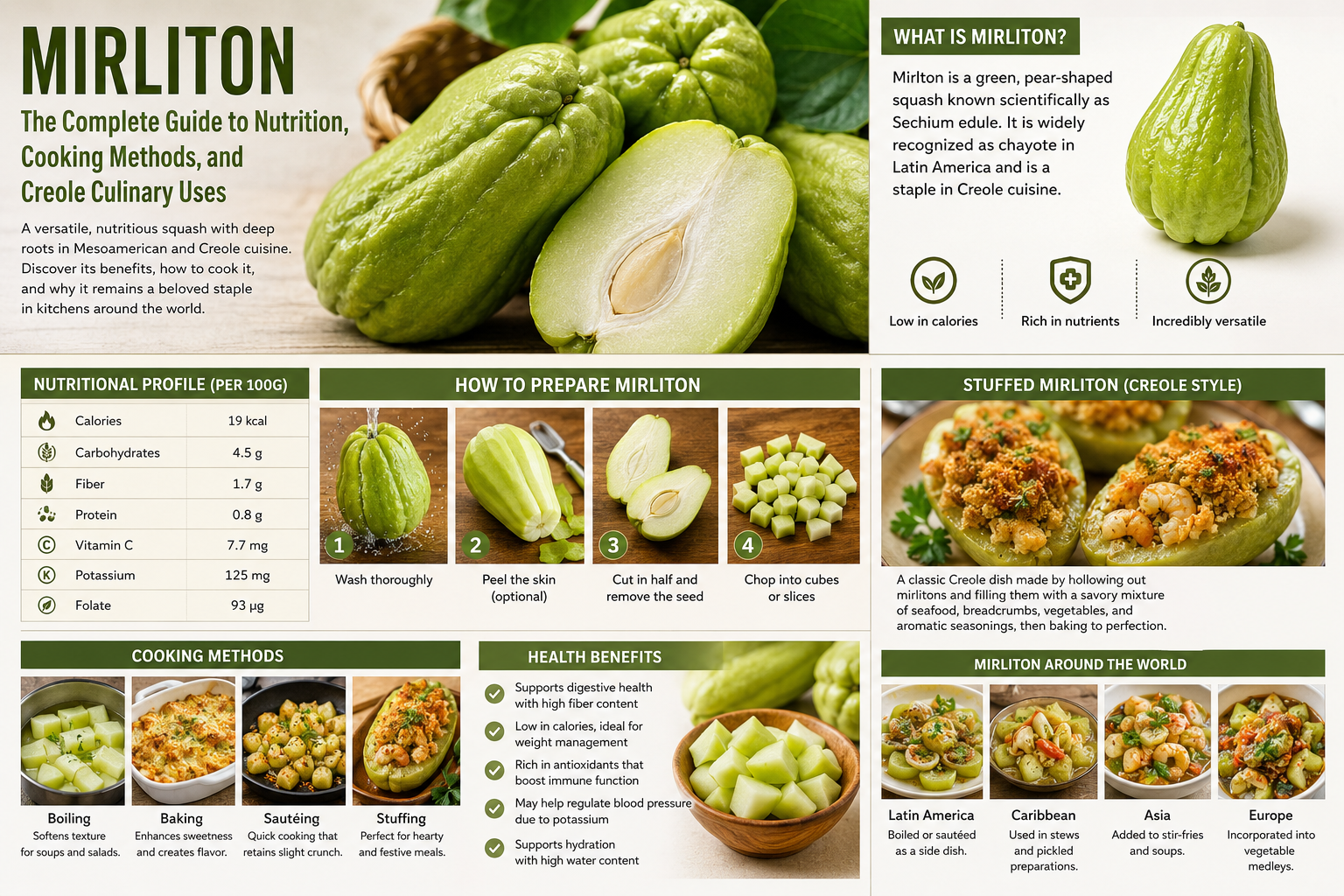
Mirlton is a green, wrinkled, pear-shaped vegetable belonging to the gourd family. Botanically known as Sechium edule, it is more widely recognized as chayote in Latin America and choko in other regions.
It is unique because the entire fruit is used both as food and as a seed for propagation. When planted, the whole vegetable sprouts into a vine plant that produces multiple fruits.
Origin and History of mirlton
Mirlton originates from Mesoamerica, particularly regions of modern-day Mexico and Central America. Indigenous cultures cultivated it for centuries before it spread across the Caribbean and southern United States.
In Louisiana, mirlton became deeply embedded in Creole cuisine, especially in New Orleans, where it is featured in seasonal dishes and holiday stuffing recipes. Its adaptability and mild taste made it a staple during times when fresh produce was limited.
Nutritional Profile of mirlton
Mirlton is highly valued for its low-calorie and nutrient-dense composition. It is rich in fiber, vitamin C, and antioxidants, making it a popular choice for healthy diets.
Nutritional Breakdown (per 100g)
| Nutrient | Amount |
|---|---|
| Calories | 19 kcal |
| Carbohydrates | 4.5 g |
| Fiber | 1.7 g |
| Protein | 0.8 g |
| Vitamin C | 7.7 mg |
| Potassium | 125 mg |
| Folate | 93 µg |
This profile makes mirlton ideal for weight management, digestive health, and heart-friendly diets.
Flavor and Texture Profile of mirlton
Mirlton has a mild, slightly sweet flavor with subtle vegetal notes. Its texture resembles a cross between zucchini and cucumber.
When cooked, it becomes tender and absorbs surrounding flavors exceptionally well, making it perfect for seasoned dishes and rich sauces.
How to Select and Store mirlton
Choosing the right mirlton ensures better taste and texture.
Selection Tips
- Choose firm, unblemished fruits
- Avoid overly soft or wrinkled skins
- Medium-sized mirltons tend to have better texture
Storage Tips
- Store in a cool, dry place for up to a week
- Refrigerate for longer freshness (up to 3 weeks)
- Avoid cutting before storage to prevent moisture loss
How to Prepare mirlton
Preparation is simple but requires attention to texture.
Step-by-Step Guide
- Wash thoroughly under running water
- Peel the outer skin (optional but recommended)
- Slice lengthwise to remove the seed
- Chop into cubes or slices depending on recipe
Mirlton releases a mild sap when cut, so rinsing hands afterward is helpful.
Cooking Methods for mirlton
Mirlton can be prepared in multiple ways:
Boiling
Softens texture and works well for mashing or salads.
Baking
Enhances sweetness and creates a caramelized flavor.
Sautéing
Quick cooking method that preserves slight crunch.
Stuffing
The most iconic method in Creole cuisine, combining seafood, breadcrumbs, and spices.
Stuffed mirlton in Creole Cuisine
One of the most famous uses of mirlton is stuffing it with savory fillings. Typically, the vegetable is hollowed out and filled with:
- Shrimp or crab meat
- Breadcrumbs
- Onions and celery
- Garlic and Creole seasoning
The filled mirlton is then baked until golden and aromatic, making it a traditional holiday dish in Louisiana households.
Health Benefits of mirlton
Mirlton is more than a culinary ingredient—it is a functional food.
Key Benefits
- Supports digestive health due to fiber content
- Low in calories, ideal for weight management
- Rich in antioxidants that support immune function
- May help regulate blood pressure due to potassium
- Supports hydration due to high water content
Common Mistakes When Cooking mirlton
Even experienced cooks make errors when preparing mirlton.
Mistakes to Avoid
- Overcooking, which leads to mushy texture
- Not removing the seed properly
- Under-seasoning due to its mild flavor
- Using overly large or overripe fruits
Global Variations and Uses of mirlton
While Creole cuisine is most famous for mirlton dishes, it is used globally in different ways:
- Latin America: boiled or sautéed as a side dish
- Asia: added to stir-fries and soups
- Caribbean: used in stews and pickled preparations
- Europe: incorporated into vegetable medleys
Its adaptability makes it a truly global ingredient.
Expert Chef Tips for mirlton Cooking
Professional chefs recommend the following:
- Pair mirlton with bold seasonings like paprika, garlic, or cayenne
- Combine with seafood for richer flavor profiles
- Pre-salt lightly to reduce moisture before cooking
- Use butter or olive oil to enhance texture
These techniques help elevate its otherwise mild profile.
Comparison Table: mirlton vs Chayote vs Zucchini
| Feature | Mirlton (Chayote) | Zucchini | Cucumber |
|---|---|---|---|
| Texture | Firm-soft | Soft | Crisp |
| Flavor | Mild sweet | Mild vegetal | Fresh, watery |
| Cooking Use | Versatile | Highly versatile | Mostly raw |
| Calories | Very low | Low | Very low |
| Best Method | Stuffed/baked | Grilled/sautéed | Raw/salads |
FAQ
What is mirlton used for?
Mirlton is commonly used in soups, casseroles, and stuffed dishes, especially in Creole cuisine.
Is mirlton healthy?
Yes, it is low in calories and rich in fiber, vitamin C, and antioxidants.
Can you eat mirlton raw?
Yes, it can be eaten raw, but it is more commonly cooked to enhance flavor and texture.
Why is mirlton popular in Louisiana?
It became a staple in Creole cooking due to its adaptability, availability, and ability to absorb rich flavors.
How do you grow mirlton?
You plant the entire fruit in soil, and it grows into a vigorous vine that produces multiple squashes.
Conclusion
The vegetable known as mirlton is a remarkably versatile and nutrient-rich ingredient with deep cultural roots in Mesoamerican and Creole cuisine. From its mild flavor to its adaptability in both simple and complex dishes, it remains a valuable addition to global kitchens.
Whether stuffed, boiled, or baked, mirlton continues to prove why it deserves more recognition in modern cooking traditions.







Post Comment