Regolen: The Complete Guide to Sustainable Stormwater Infiltration Systems
Introduction
Urban flooding, overloaded sewer systems, and groundwater depletion are becoming serious challenges for cities worldwide. As roads, parking lots, and buildings replace natural soil, rainwater can no longer infiltrate naturally into the ground. Instead, stormwater rapidly flows into drainage systems, increasing flood risks and environmental stress.
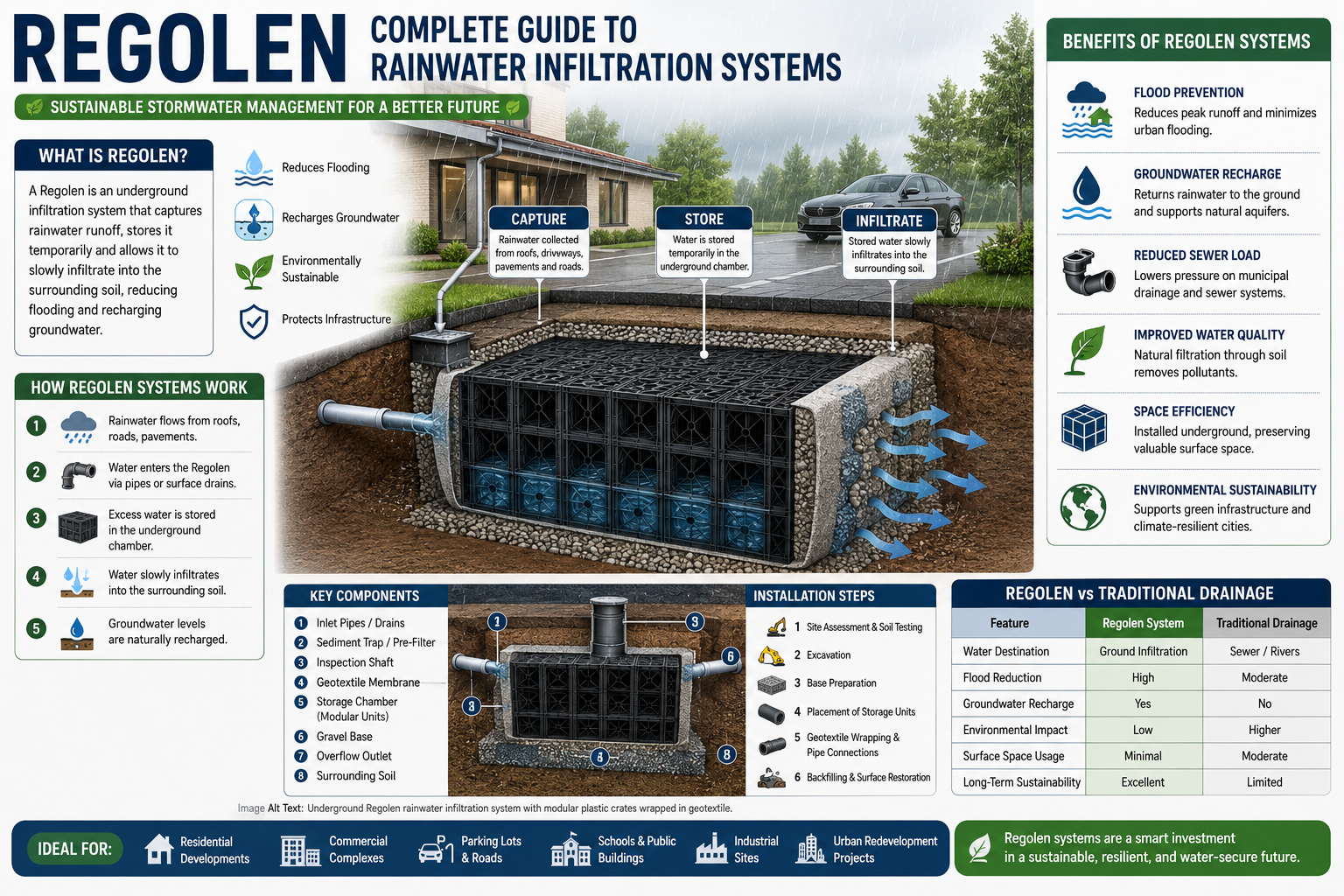
This is where Regolen systems have become an essential solution. A Regolen is an underground stormwater infiltration system designed to capture, store, and slowly release rainwater back into surrounding soil. These systems support sustainable urban drainage while reducing pressure on municipal infrastructure.
As climate change increases rainfall intensity and urbanization continues expanding, Regolen technology is now widely used in residential developments, commercial projects, industrial facilities, and public infrastructure planning.
What Is Regolen?
Quick Answer Definition
A Regolen is an underground rainwater infiltration system that temporarily stores stormwater runoff and gradually allows it to seep into surrounding soil, helping reduce flooding and recharge groundwater supplies.
The system usually consists of gravel-filled trenches or modular plastic infiltration units wrapped in geotextile fabric. Water enters through drainage pipes, is stored underground, and slowly infiltrates into the soil over time.
Regolen systems are a core component of:
- Sustainable Urban Drainage Systems (SUDS)
- Low Impact Development (LID)
- Green infrastructure planning
- Climate-resilient construction
How Regolen Systems Work
Regolen systems operate using a simple but highly effective water management cycle.
Step-By-Step Process
1. Rainwater Collection
Rainwater runoff flows from roofs, roads, pavements, or parking areas into drainage pipes or surface inlets.
2. Temporary Underground Storage
The collected water enters the underground infiltration chamber where excess stormwater is temporarily stored.
3. Controlled Soil Infiltration
Water gradually seeps through surrounding soil layers instead of overwhelming sewer systems.
4. Groundwater Recharge
The infiltrated water replenishes underground aquifers and supports natural hydrological cycles.
Because the entire structure is underground, surface land remains usable for landscaping, traffic areas, or buildings.
Main Types of Regolen Systems
Different system designs are used depending on project size, rainfall intensity, soil conditions, and load requirements.
Gravel-Filled Regolen Systems
Traditional systems use crushed stone or washed gravel to create underground storage voids.
Advantages
- Lower material costs
- Simple construction process
- Natural filtration properties
- Long-lasting durability
Limitations
- Lower storage efficiency
- Requires larger excavation space
- Heavier construction materials
Modular Plastic Regolen Systems
Modern projects increasingly use lightweight plastic infiltration crates with high void capacity.
Benefits
- High water storage efficiency
- Faster installation
- Reduced excavation volume
- Suitable beneath roads and parking lots
- Lightweight transportation
These systems are commonly installed in urban developments where underground space is limited.
Mulden-Rigolen Systems
These systems combine vegetated surface swales with underground infiltration chambers.
Key Benefits
- Natural sediment filtration
- Improved water quality treatment
- Better landscape integration
- Reduced clogging risks
Mulden-rigolen systems are especially popular in environmentally focused urban design projects.
Key Components of a Regolen Installation
A properly engineered system contains multiple components working together to ensure efficient stormwater management.
Essential Components
- Inlet pipes and drainage channels
- Sediment traps
- Pre-filtration systems
- Storage chambers
- Gravel or modular infiltration units
- Geotextile membrane wrapping
- Overflow outlets
- Inspection shafts
Each element helps maintain long-term efficiency while protecting groundwater quality.
Benefits of Using Regolen Systems
Flood Prevention
Regolen systems temporarily store stormwater during heavy rainfall, reducing peak flow entering drainage networks.
This significantly lowers urban flood risks.
Groundwater Recharge
Unlike conventional drainage systems, Regolen technology allows rainwater to infiltrate naturally into underground aquifers.
This supports long-term water sustainability.
Reduced Sewer System Pressure
Municipal sewer systems experience less stress during storms, reducing overflow risks and infrastructure damage.
Space Efficiency
Because the infrastructure is underground, surface land remains available for:
- Parking areas
- Landscaping
- Roads
- Public spaces
- Residential construction
Improved Water Quality
Natural soil filtration helps remove pollutants before water reaches groundwater reserves.
Environmental Sustainability
Regolen systems help restore natural water cycles disrupted by urbanization.
Regolen vs Traditional Drainage Systems
| Feature | Regolen System | Traditional Drainage |
|---|---|---|
| Water destination | Ground infiltration | Sewer discharge |
| Flood reduction | High | Moderate |
| Groundwater recharge | Yes | No |
| Environmental impact | Low | Higher |
| Surface space usage | Minimal | Moderate |
| Sustainability | Excellent | Limited |
Traditional systems focus on removing water quickly, while Regolen systems prioritize natural infiltration and environmental balance.
Important Design Considerations for Regolen
Proper design is essential for long-term system performance.
Soil Permeability
The surrounding soil must allow adequate water infiltration.
Ideal Soil Types
- Sandy soils
- Loamy soils
- Mixed permeable soils
Clay-heavy soils may require supplemental drainage systems.
Groundwater Table Depth
The infiltration chamber should remain above the groundwater table to maintain effectiveness.
Catchment Area Calculations
Engineers estimate runoff volume using:
- Roof area
- Paved surface size
- Rainfall intensity
- Regional climate data
Accurate sizing prevents overflow issues.
Structural Load Requirements
Systems installed beneath roads or parking lots require reinforced modular structures capable of handling heavy traffic loads.
Step-by-Step Regolen Installation Process
Step 1: Site Assessment
Professionals evaluate:
- Soil conditions
- Groundwater levels
- Drainage patterns
- Available space
Step 2: Excavation
A trench or underground pit is excavated according to engineering specifications.
Step 3: Base Preparation
A bedding layer of sand or fine gravel is added to stabilize the structure.
Step 4: Storage Chamber Installation
Gravel fill or modular infiltration crates are placed inside the excavation area.
Step 5: Geotextile Wrapping
The system is wrapped with permeable geotextile fabric to prevent soil intrusion while allowing water infiltration.
Step 6: Pipe Connections
Downspouts and drainage pipes are connected to the chamber.
Step 7: Backfilling and Surface Restoration
The excavation is carefully backfilled and compacted before restoring pavement or landscaping.
Maintenance and Long-Term Performance
One major advantage of Regolen systems is their relatively low maintenance requirement.
Routine Maintenance Tasks
- Inspect inlet filters annually
- Remove sediment buildup
- Check overflow outlets
- Clean inspection chambers
- Monitor infiltration performance
Well-designed systems can last 30–50 years or more with proper maintenance.
Costs and Economic Factors
The cost of a Regolen installation depends on several variables.
Main Cost Factors
- Excavation depth
- Soil stability
- System size
- Material selection
- Accessibility
- Labor costs
- Traffic load requirements
Although initial installation costs may exceed standard drainage systems, long-term savings often offset the investment through:
- Reduced flood damage
- Lower infrastructure strain
- Reduced stormwater fees
- Increased property resilience
Environmental Impact and Sustainability
Sustainable stormwater management is one of the primary reasons Regolen systems are rapidly gaining global adoption.
Key Environmental Benefits
- Restores natural hydrological cycles
- Reduces polluted runoff
- Supports groundwater replenishment
- Helps mitigate urban heat islands
- Supports urban vegetation
- Reduces erosion risks
Many green building certification systems encourage infiltration-based drainage solutions.
Common Mistakes to Avoid
Poor planning can significantly reduce system efficiency.
Frequent Errors
Ignoring Soil Testing
Installing in impermeable soil without testing can lead to system failure.
Undersizing the Chamber
Insufficient storage capacity increases overflow risks.
Poor Sediment Management
Without proper filtration, sediment buildup may clog infiltration zones.
Installing Too Close to Foundations
Improper placement may increase moisture risks around buildings.
Lack of Maintenance Access
Inspection shafts are essential for long-term servicing.
Professional engineering design is strongly recommended for medium and large-scale projects.
Future Trends in Stormwater Management
Cities are increasingly shifting toward decentralized water management systems.
Emerging Innovations
- Smart monitoring sensors
- AI-assisted drainage management
- Integrated rainwater harvesting
- Green roof integration
- Climate-resilient urban planning
As sustainability regulations continue strengthening, infiltration systems like Regolen are expected to become standard practice in modern infrastructure design.
Expert Tips for Better Regolen Performance
Use Pre-Filtration Systems
Sediment traps significantly extend system lifespan.
Prioritize Soil Testing
Understanding infiltration capacity prevents costly redesigns later.
Combine With Green Infrastructure
Pairing Regolen systems with permeable pavements or bioswales improves environmental performance.
Plan for Extreme Rainfall Events
Climate change is increasing storm intensity, making future-proof sizing essential.
Conclusion
Regolen systems have become one of the most effective solutions for sustainable stormwater management in modern urban environments. By capturing rainwater underground and gradually infiltrating it into surrounding soil, these systems reduce flooding, recharge groundwater reserves, and lower pressure on municipal drainage infrastructure.
As cities continue expanding and climate-related rainfall events become more severe, investing in Regolen technology is no longer simply an environmental choice — it is a practical infrastructure strategy for long-term urban resilience.
Whether used in residential developments, commercial projects, roads, or public infrastructure, Regolen systems offer a sustainable, space-efficient, and environmentally responsible approach to managing stormwater naturally.
FAQ
What Is the Main Purpose of a Regolen System?
A Regolen system captures stormwater runoff, stores it underground, and gradually infiltrates it into surrounding soil to reduce flooding and support groundwater recharge.
Can Regolen Systems Be Installed Under Driveways?
Yes. Modular plastic infiltration systems are designed to withstand heavy traffic loads and are commonly installed beneath driveways, parking lots, and roads.
How Long Do Regolen Systems Last?
With proper design, installation, and maintenance, Regolen systems can remain effective for 30–50 years or longer.
Do Regolen Systems Require Electricity?
No. Most systems operate passively using gravity and natural soil infiltration processes.
Are Regolen Systems Environmentally Friendly?
Yes. They reduce polluted runoff, support groundwater replenishment, and restore natural water cycles disrupted by urbanization.






Post Comment